Leading Advantages of Moving Into a Memory Care Home for Senior Citizens
Business Name: BeeHive Homes of Clovis
Address: 2305 N Norris St, Clovis, NM 88101
Phone: (505) 591-7025
BeeHive Homes of Clovis
Beehive Homes of Clovis assisted living care is ideal for those who value their independence but require help with some of the activities of daily living. Residents enjoy 24-hour support, private bedrooms with baths, medication monitoring, home-cooked meals, housekeeping and laundry services, social activities and outings, and daily physical and mental exercise opportunities. Beehive Homes memory care services accommodates the growing number of seniors affected by memory loss and dementia. Beehive Homes offers respite (short-term) care for your loved one should the need arise. Whether help is needed after a surgery or illness, for vacation coverage, or just a break from the routine, respite care provides you peace of mind for any length of stay.
2305 N Norris St, Clovis, NM 88101
Business Hours
Making the choice to relocate a loved one into memory care is hardly ever straightforward. For numerous households, it begins with a collection of small worries that start to build up. A missed drug below, a pot left on the stove there, a mid-day stray that develops into panic. At first, it is alluring to deal with each moment as isolated. Then the pattern comes to be difficult to ignore.
That is commonly when families start searching for memory care near me, wishing to find an area that feels secure without sensation sterile, structured without feeling inflexible, and helpful without eliminating dignity. The very best memory care homes do specifically that. They do not simply fulfill functional requirements. They change the everyday experience old with dementia or related cognitive decline in ways that can be really felt promptly by the senior and, just as significantly, by the family members around them.
More safety, less continuous crisis management
Safety is generally the initial reason households start taking a look at memory care, and for good factor. Dementia changes judgment, positioning, and temporary memory in ways that can make a regular home really feel packed with covert dangers. Doors get exposed. Stoves get activated and failed to remember. Drugs are increased or missed. An individual who has actually constantly lived individually can all of a sudden end up being vulnerable to falls, dehydration, roaming, or confusion in the middle of the night.
A memory care home is created around those truths. Hallways are simpler to browse. Exits are safeguarded in such a way that protects against risky wandering while still permitting flexibility of activity inside the community. Team member are educated to observe when a resident seems disoriented, upset, hungry, thirsty, or in jeopardy of dropping. That appears easy, but the everyday effect is massive. Households no longer need to live in a state of alert regularly, wondering whether the phone will certainly sound with bad news.
I have seen households carry a level of anxiety that verge on exhaustion long prior to the relocation ever before occurs. They are doing their finest, yet nobody can safely supervise a loved one every waking hour for months or years on end. Senior care at a memory care home moves the worry from one overextended home to a setting developed for the job.
Daily routines come to be steadier and simpler to manage
People living with memory loss tend to do better when the day has shape. Excessive changability can lead to anxiety, confusion, and behavior adjustments. Inadequate stimulation can lead to boredom, withdrawal, or uneasyness. Memory care homes are developed with that equilibrium in mind.
There is convenience in uniformity. Meals are offered at foreseeable times. Caregivers make use of familiar rhythms for bathing, dressing, and personal care. Activities adhere to a schedule that assists locals anticipate what follows without needing to bear in mind every detail. This kind of framework might seem common from the outside, but also for someone with dementia, it can be relaxing in a way that household caregivers typically can not replicate in your home regardless of how hard they try.
Routine also decreases the number of decisions a resident has to make in a day. That matters greater than people understand. A senior living near me look typically turns up neighborhoods that offer memory assistance particularly since family members observe how much easier life obtains when selection overload is decreased. As opposed to asking someone with memory loss to browse a messy kitchen, a busy road, or a complex medication schedule, the community silently looks after the friction points.
That does not suggest citizens are dealt with like youngsters or given a one-size-fits-all schedule. Excellent memory care homes still adapt to specific preferences. A long time early riser can be up prior to breakfast. Someone that appreciates songs after lunch might have that constructed right into the day. The structure exists to support the individual, not flatten their personality.
Better guidance than many families can offer at home
Even the most devoted family members face restrictions. A spouse might be aging too, with their very own health and wellness concerns. Grown-up children may be juggling work, kids, and long drives throughout town. A home health assistant may just be there for a couple of hours a day. Amnesia does not respect those schedules.
One of the strongest benefits of memory care is continuous guidance. That does not suggest a resident is seen in a cold or intrusive way. It means somebody neighbors to action in when a restroom trip ends up being complex, when a resident becomes anxious, or when a person who is usually calm beginnings pacing due to the fact that something really feels off. Those small interventions can prevent an autumn, a debate, a panic episode, or a hazardous decision.
This matters particularly at night. Sundowning, which frequently brings even more complication or frustration in the late mid-day and evening, can leave family members drained pipes. At home, evening can end up being a tense look for wandering or insomnia. In a memory care home, personnel are already awake, currently educated, and already prepared to react. That alone can recover a sort of tranquility that families have actually not really felt in months.
Social connection comes back into the picture
Isolation can be among one of the most painful components of dementia. A person who when loved discussion might stop reaching out because they can not track the string. Another may grow silent because they are embarrassed by lapse of memory. In your home, it is simple for days to become extremely small: the very same areas, the exact same television, the same site visitors if any individual comes at all.
Memory care areas construct social communication right into the day, but in gentler, much more achievable means than lots of people anticipate. Homeowners may join a straightforward craft activity, listen to acquainted songs, fold towels, water plants, or attend a small seminar. The factor is not busywork. The point is involvement that really feels possible.
I have enjoyed homeowners that barely spoke initially begin to illuminate throughout an acquainted tune from their youth. I have actually seen a person that can no longer follow a lengthy conversation still smile and add when discussing an old recipe or a hometown memory. These moments matter due to the fact that memory care is not only concerning keeping someone risk-free. It has to do with protecting link, identification, and a sense of belonging for as long as possible.
For member of the family, that social environment also relieves sense of guilt. It is an alleviation to know a loved one is not investing lengthy stretches alone, waiting on somebody to sign in. Also when memory is falling short, individuals still discover whether life around them feels alive.
Professional elder care can deal with changing demands extra gracefully
Dementia is not static. Requirements change, in some cases progressively and occasionally at one time. An individual that just needed tips in the house 6 months earlier may currently need assistance eating, showering, clothing, or identifying time and area. This progression can be psychologically rough for families due to the fact that each new requirement can seem like an additional loss.
Memory care personnel are utilized to those shifts. That experience issues. They recognize that person might come to be flustered when rushed during pet grooming, while one more might resist assistance unless they are approached from the front and resolved by name. They know that a resident that declines lunch may really require aid recognizing the tray, or that someone that seems combative might be scared rather than angry.

This kind of elder care is not almost tasks. It is about analysis. Experienced caregivers learn the language behind the actions. They check out what a resident is attempting to communicate, not just what they are doing on the surface. Family members commonly find this deeply calming due to the fact that the setting does not worry when signs shift. It adapts.
That adaptability also aids avoid the stopgap solutions family members in some cases rely on in your home. You might begin with a few tips, then a tablet coordinator, after that a caretaker, after that a home health and wellness visit, after that an emergency room journey after an autumn. Memory care is made to soak up a lot of that intensifying complexity in one place.
Families frequently end up being family members again
One of the least talked about advantages of relocating into memory care is what it provides for relationships. When a partner or adult kid comes to be the main caregiver, the psychological dynamic can obtain tangled. Every visit can turn into a duty listing. Every telephone call ends up being a problem to fix. Love continues to be, however it gets hidden under logistics.
Once a resident actions into a memory care home, households frequently get an opportunity to go back to a more all-natural relationship. Visitations can end up being gentler. You can rest with each other and look through old pictures without fretting about whether the oven is on. You can appreciate an afternoon walk in the courtyard as opposed to inspecting medicine times. You can concentrate senior care on link instead of continuous correction.
That shift does not get rid of despair. Absolutely nothing does that. Yet it can lower the anger that often establishes when household caregiving becomes unsustainable. People often feel guilty concerning also wanting alleviation. Yet respite care and long-lasting memory assistance are not indications of failing. They are acknowledgments of reality. A family members can refrain whatever, and attempting to do everything can harm both the caretaker and the individual getting care.
When the caregiving stress lightens, families usually turn up better. They laugh more. They pay attention much more. They are less protective, much less diminished, and less most likely to argue about every information. That might be one of the greatest benefits of all.
Meals, medicines, and individual care end up being extra reliable
The sensible side of memory care is very easy to neglect up until something goes wrong in the house. Dishes are avoided because the individual says they are not hungry, or since they can not remember whether they already ate. Medicines are missed out on or duplicated. Showering comes to be a battle. Clothes selections end up being weather-inappropriate because the individual can not track the projection or the season.
Memory care homes develop dependable support around those everyday essentials. Nutrition is kept an eye on. Medications are administered by experienced personnel according to the care plan. Hydration is urged throughout the day. Help with bathing, grooming, toileting, and dressing is given with level of sensitivity and privacy.
This consistency can make a visible distinction in physical wellness. A senior that has been dropping weight in your home may start eating even more frequently. A resident that was persistantly dehydrated might end up being steadier. Skin problems, drops, and confusion connected to missed out on medications might improve. Not every trouble disappears, certainly, since dementia is complex and frequently progressive. Yet the standard is extra secure, and stability matters.
Families in some cases underestimate just how much power dementia consumes just to manage the essentials. By the time morning meal is managed, a medication is figured out, and a 2nd outfit is selected due to the fact that the very first one was soaked or mismatched, half the day is gone. In a memory care setup, those jobs are folded up right into the rhythm of the day so the resident does not need to keep changing each one.
Specialized settings can minimize complication and anxiety
The physical design of a memory care home is more crucial than many people realize. Lighting, color, flooring patterns, signage, and room format all influence how conveniently a resident can move via the room. A hallway that feels common to a healthy and balanced grownup can feel disorienting to a person with dementia. Representations, mess, or way too much noise can set off unease.
Good memory care areas focus on these information. They commonly utilize clear sightlines, secure outdoor rooms, acquainted hints, and streamlined formats that help homeowners orient themselves a lot more conveniently. Exclusive areas and typical areas are set up to sustain both safety and dignity. The objective is not to make the space really feel medical. The objective is to make it readable.
That readability can reduce stress for everyone. A resident who can much more conveniently locate the dining room is much less most likely to end up being aggravated or taken out. An individual who can recognize their very own door or comply with a simple course to the courtyard might feel a lot more independent than they carried out in a larger, much more confusing setup. Small environmental choices can have a surprisingly large emotional effect.
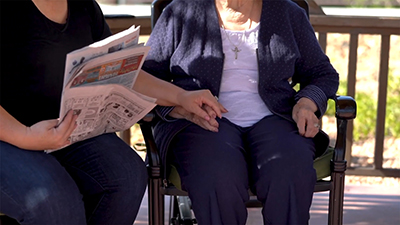
Respite for family members caregivers can change the whole trajectory
Sometimes an action right into memory care happens after a situation. Various other times family members utilize respite care initially, either to test the waters or to recoup from caretaker exhaustion. A brief remain can be extremely insightful. It shows how a loved one reacts to a new regimen, how they tolerate organized assistance, and how much of the daily burden the family members has actually been carrying without recognizing it.
Caregiver burnout is not a minor problem. It can turn up as irritability, insomnia, regret, frustrations, constant worry, or a sense of dread every time the phone rings. It can additionally bring about hurried choices and strained relationships. Having access to respite care via a memory care community provides family members taking a breath room. Often that breathing room verifies that home is still workable in the meantime. In some cases it reveals that the family members has actually been running much past capacity.
Either means, the relief is actual. A child who has actually not rested via the evening in weeks might lastly rest. A spouse who has actually been attempting to handle every dish, shower, and drug round might obtain an opportunity to consume without disturbance. Those breaks are not deluxes. They belong to sustainable senior care.
The step can be emotionally hard and still be the best choice
It would be unethical to act that relocating right into memory care is always easy or welcome. Lots of elders withstand the idea in the beginning, particularly if they still have minutes of quality. Family members may battle with the timing. There may be rips, temper, bargaining, and second-guessing. Every one of that can occur also when the relocation is plainly the safest option.
What assists most is honesty. The decision is usually less concerning giving up and extra concerning selecting the right environment for the present fact. A loved one with amnesia might still have numerous good years in advance, however those years often require a kind of support that home can no more accurately offer. A memory care home deals that sustain in a setting constructed around the real challenges of cognitive decline.
If you are contrasting areas, the differences are worth taking note of. Team training, nighttime supervision, activity high quality, dining assistance, family interaction, and the general tone of the location issue a great deal. When people search for memory care near me or senior living near me, they are not just looking for a structure. They are searching for the best fit, one that matches the individual's demands and maintains as much comfort as possible.
What households tend to notice after the move
The changes after a move are not constantly remarkable, and they do not take place on a cool timetable. Still, households commonly discover a few common shifts within the initial a number of weeks. The house really feels quieter. There are fewer emergency situations. Medicine pointers are no longer a resource of panic. Sleep improves for the caretaker. Visits start to feel more like visits again.
Some homeowners come to be calmer once the complication of home life reduces. Others take more time to work out in, specifically if they are made use of to finish freedom or if amnesia makes change really feel harmful. Good areas expect that modification duration and overcome it patiently. They do not deal with preliminary resistance as the final word.
What matters most is the viewpoint. Memory care is not regarding making life ideal. It is about making life safer, steadier, and more humane for someone whose brain no longer gives them the same tools it when did. It has to do with lowering unnecessary struggle. It is about maintaining self-respect while fulfilling very real needs.
For numerous families, that comes to be the factor where guilt gives way to alleviation. Not since the scenario is very easy, however since the day-to-day experience finally makes sense.
BeeHive Homes of Clovis provides assisted living care
BeeHive Homes of Clovis provides memory care services
BeeHive Homes of Clovis provides respite care services
BeeHive Homes of Clovis supports assistance with bathing and grooming
BeeHive Homes of Clovis offers private bedrooms with private bathrooms
BeeHive Homes of Clovis provides medication monitoring and documentation
BeeHive Homes of Clovis serves dietitian-approved meals
BeeHive Homes of Clovis provides housekeeping services
BeeHive Homes of Clovis provides laundry services
BeeHive Homes of Clovis offers community dining and social engagement activities
BeeHive Homes of Clovis features life enrichment activities
BeeHive Homes of Clovis supports personal care assistance during meals and daily routines
BeeHive Homes of Clovis promotes frequent physical and mental exercise opportunities
BeeHive Homes of Clovis provides a home-like residential environment
BeeHive Homes of Clovis creates customized care plans as residents’ needs change
BeeHive Homes of Clovis assesses individual resident care needs
BeeHive Homes of Clovis accepts private pay and long-term care insurance
BeeHive Homes of Clovis assists qualified veterans with Aid and Attendance benefits
BeeHive Homes of Clovis encourages meaningful resident-to-staff relationships
BeeHive Homes of Clovis delivers compassionate, attentive senior care focused on dignity and comfort
BeeHive Homes of Clovis has a phone number of (505) 591-7025
BeeHive Homes of Clovis has an address of 2305 N Norris St, Clovis, NM 88101
BeeHive Homes of Clovis has a website https://beehivehomes.com/locations/clovis/
BeeHive Homes of Clovis has Google Maps listing https://maps.app.goo.gl/SMhM3zbKaKgR1UAX6
BeeHive Homes of Clovis has TikTok page https://tiktok.com/@beehivehomes_clovis
BeeHive Homes of Clovis has Facebook page https://www.facebook.com/beehiveclovis
BeeHive Homes of Clovis has Instagram page https://www.instagram.com/beehivehomesclovis/
BeeHive Homes of Clovis has an YouTube page https://www.youtube.com/@WelcomeHomeBeeHiveHomes
BeeHive Homes of Clovis won Top Assisted Living Homes 2025
BeeHive Homes of Clovis earned Best Customer Senior Service Award 2024
BeeHive Homes of Clovis placed 1st for Senior Living Communities 2025
People Also Ask about BeeHive Homes of Clovis
What is BeeHive Homes of Clovis Living monthly room rate?
The rate depends on the level of care that is needed. We do a pre-admission evaluation for each resident to determine the level of care needed. The monthly rate is based on this evaluation. There are no hidden costs or fees
Can residents stay in BeeHive Homes until the end of their life?
Usually yes. There are exceptions, such as when there are safety issues with the resident, or they need 24 hour skilled nursing services
Do we have a nurse on staff?
No, but each BeeHive Home has a consulting Nurse available 24 – 7. if nursing services are needed, a doctor can order home health to come into the home
What are BeeHive Homes’ visiting hours?
Visiting hours are adjusted to accommodate the families and the resident’s needs… just not too early or too late
Do we have couple’s rooms available?
Yes, each home has rooms designed to accommodate couples. Please ask about the availability of these rooms
Where is BeeHive Homes of Clovis located?
BeeHive Homes of Clovis is conveniently located at 2305 N Norris St, Clovis, NM 88101. You can easily find directions on Google Maps or call at (505) 591-7025 Monday through Sunday 9:00am to 5:00pm
How can I contact BeeHive Homes of Clovis?
You can contact BeeHive Homes of Clovis by phone at: (505) 591-7025, visit their website at https://beehivehomes.com/locations/clovis/ or connect on social media via TikTok Facebook or YouTube
Take a drive to Cotton Patch Cafe. Cotton Patch Café serves homestyle comfort food suitable for assisted living, memory care, senior care, elderly care, and respite care family meals.